Why Is a Solar System Important for a Housing Society?
Electricity is one of the biggest recurring expenses for a housing society. From lifts and water pumps to parking lights, CCTV cameras, security systems, and common-area lighting, societies consume a significant amount of electricity every month.
With rising electricity costs and increasing awareness about environmental sustainability, installing a solar system for a housing society can be a smart and long-term solution.
☀️ Why Should Housing Societies Install Solar Systems?
A large portion of a societys electricity consumption comes from common facilities. By using solar energy for these requirements, a housing society can reduce its dependence on conventional electricity and potentially lower its monthly electricity expenses.
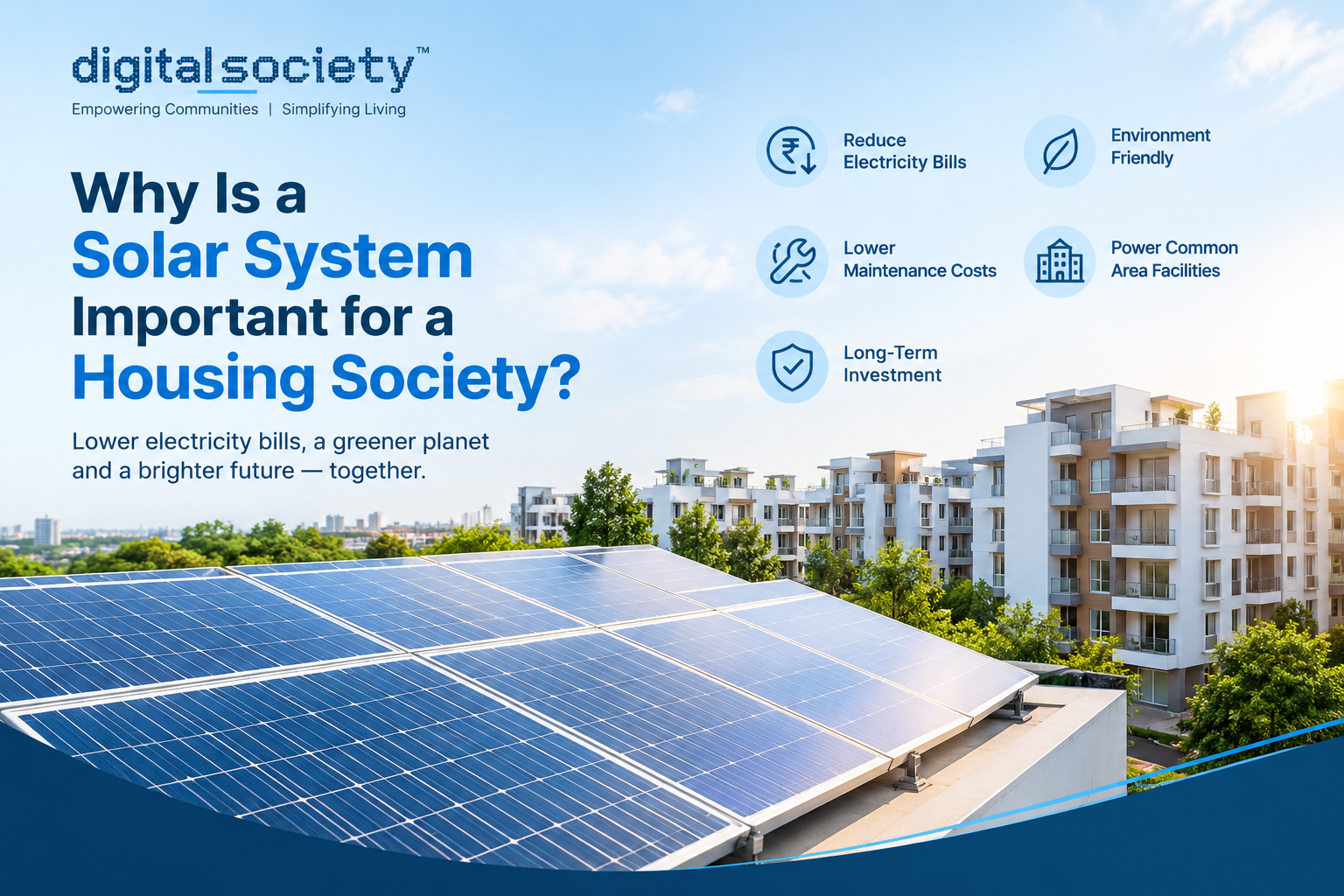
1. Reduce Electricity Bills
Solar panels generate electricity using sunlight. The generated power can be used for various common-area requirements, helping reduce the amount of electricity purchased from the grid.
Over time, this can result in significant savings on the societys monthly electricity bill.
2. Reduce Maintenance Expenses
Electricity bills can represent a major part of a housing societys monthly maintenance budget.
By reducing electricity expenses through solar power, the society can potentially use the savings for other important requirements such as:
- Security and CCTV
- Cleaning and housekeeping
- Repairs and maintenance
- Lift maintenance
- Infrastructure improvements
This can help the society manage its overall maintenance budget more efficiently.
3. An Environment-Friendly Energy Solution
Solar energy is a clean and renewable source of energy. Unlike conventional electricity generation, solar power does not require the burning of fossil fuels at the point of generation.
By adopting solar energy, housing societies can contribute towards reducing their carbon footprint and creating a more environmentally responsible community.
4. Useful for Common-Area Facilities
Solar power can be used for several common facilities within a housing society, depending on the systems capacity and design.
These may include:
- Common-area lighting
- Water pumps
- Parking-area lights
- CCTV systems
- Security systems
- Garden lighting
- Society office
- Other common electrical equipment
A properly designed solar system can therefore support many of the societys daily operations.
5. A Long-Term Investment
Installing a solar system requires an initial investment. However, it should be viewed as a long-term investment rather than simply an additional expense.
The savings generated through lower electricity consumption can help recover the initial investment over time. The actual payback period will depend on factors such as system size, electricity consumption, installation cost, available sunlight, and applicable policies.
🏢 Things to Consider Before Installing Solar Panels
Before installing a solar system, a housing society should evaluate its:
- Monthly electricity consumption
- Available rooftop space
- Current electricity tariff
- Solar system capacity requirements
- Installation and maintenance costs
- Expected savings and payback period
- Applicable government policies and subsidies
- System maintenance and warranty
A professional site assessment and energy-consumption analysis can help the society choose the right solar capacity.
🌱 A Smart Step Towards a Sustainable Housing Society
For housing societies, solar energy can offer more than just electricity savings. It can help reduce recurring expenses, support common-area operations, and encourage a more sustainable way of living.
As electricity costs and energy requirements continue to grow, investing in solar energy for housing societies can be a practical step towards building a greener and more energy-efficient community.
A solar-powered housing society is not just an investment in energy — it is an investment in a cleaner, smarter, and more sustainable future.